
Work & everyday bullshit
PTO: Apparently I owe the week back.
The last-minute requests before you leave, the backlog when you return, and the ridiculous things we consider just to get a break.
Join the discussion →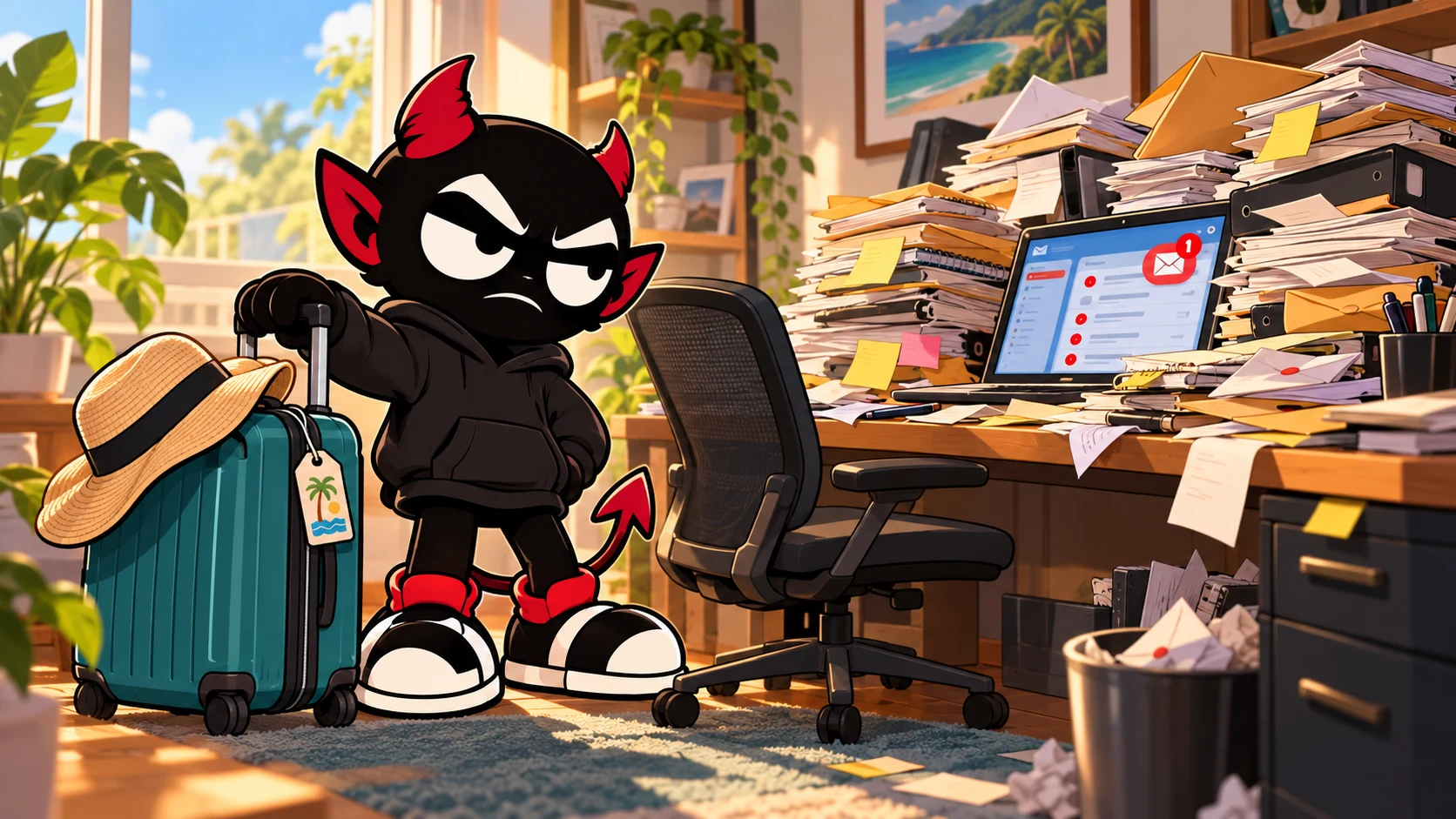
I gave my coworkers a full month's notice that I was going on vacation. For three weeks, nothing. Then, a few days before I left, apparently everyone had something critical they needed from me.
My return was spent wading through a mountain of emails and messages. I took a week off, but a decent chunk of the work seemed to have waited for me.
That's what sent me looking into this. I wanted to know whether there were better ways to handle the run-up and the return, beyond working harder before I left and faster when I got back. Because once you're doing both, you start wondering how much of the break you're actually getting.
I don't regret taking the time. I resent the amount of work attached to making it happen.
The vacation is approved. The workload hasn't noticed.
Putting PTO on the calendar tells people when you'll be gone. It doesn't decide who handles your work, which requests can wait, or what gets dropped while the team has one fewer person available.
Without those decisions, the remaining options are pretty familiar. Finish everything before you leave. Keep an eye on things while you're away. Deal with it when you return. Sometimes you get the full package.
And giving more notice doesn't necessarily fix it. I gave a month. The problem wasn't that people couldn't see the dates. The requests still arrived right before them.
My take is that a departure date can become an unofficial deadline for everyone else's unfinished business. They want their thing done before you disappear, and you get to work out how all those things fit into the same remaining hours.
It would be nice if being organized about your absence meant you weren't also expected to absorb everyone else's lack of planning.
Apparently plenty of people dread coming back
In September 2026, Zoom published an Out of Office Index conducted by Morning Consult. Among the 1,000 U.S. knowledge workers surveyed, 61% dreaded the work waiting after PTO, and 65% reported working extra hours before taking time off. Another finding was particularly grim: 68% said they'd rather monitor their inbox on vacation than return to hundreds of unread emails.
It's a company-sponsored survey released alongside a product pitch, not a verdict on every workplace. But it describes the bargain pretty well. Stay involved during your break to make the aftermath less awful.
Read the survey and methodology.
That doesn't mean vacation is pointless. A 2025 meta-analysis covering 32 studies found substantial improvements in well-being, with benefits lasting longer than earlier research had suggested. Being able to mentally disengage from work was associated with better outcomes.
So I'm not looking for reasons to stop taking time off. I'm looking for ways to stop making it such a pain in the ass.
Give requests a deadline before your departure date
The first thing I'd change is the notice itself. Dates alone leave too much room for people to assume you'll squeeze something in before you go.
A more useful message would include a request cutoff. For example: "I'm away next week. If you need something reviewed before then, send it by Wednesday. Anything arriving later needs a separate conversation about timing or coverage."
That doesn't mean pretending a real emergency can't happen after Wednesday. It means asking what is actually urgent rather than accepting the sender's timing as your problem to solve.
If several requests make the cutoff and they still won't fit, someone needs to pick which ones matter most. Preferably before you've promised all of them to different people.
A cutoff is only useful if your manager backs it. Otherwise you've written a very clear message about a boundary you're still expected to ignore.
Give the backup enough authority to cover
A handoff needs to answer a few practical questions: what's currently happening, what might need a decision, where the useful information lives, and what the person covering you can actually approve.
Listing a coworker as your backup is a start. If every decision still requires your permission, you've given them the job of forwarding messages to someone on vacation.
The backup also needs room to do the work. Two people's workloads don't fit into one person's week because the second person's name appears in an automatic reply. Some work has to move, wait, or get reassigned again.
This is where I lose patience with advice that puts the whole thing on the employee taking leave. A detailed handoff can help. It cannot create staffing or authorize a colleague to make decisions management hasn't let them make.
Agree on what is worth interrupting the break
For work that genuinely needs emergency coverage, decide who handles that coverage and how an actual escalation reaches the right person. In an ordinary absence, the person on PTO shouldn't have to keep opening every channel to find out whether anything matters.
The useful question is what happens if the issue waits until your return. An immediate operational problem is different from someone wanting an answer before their next meeting.
I'd want one agreed escalation route, handled by someone who can assess the situation. An out-of-office reply should name the person covering the work and the actual return date, with no vague promise to check messages that you don't intend to keep.
Of course, that arrangement depends on people respecting it. A backup process is worth very little if everyone bypasses it because texting you is easier.
The extra PTO day I'm considering
Here's the part that makes me feel ridiculous. My current idea is to take one extra PTO day at the start of my return and use it to catch up.
Read the email. Sort through the messages. Figure out what happened while I was gone. Get enough of a handle on things that I'm not trying to reconstruct the previous week between meetings and interruptions.
It would be a workday, paid for out of my time off.
I'm considering it because, at the moment, it's the only viable way I can see to get that uninterrupted time. And yes, it's a shitty deal. I'm talking about spending a day of leave doing my job so I can be ready to do my job when I'm officially back.
The version I'd actually like is a protected catch-up day counted as work. No routine meetings, fewer interruptions, time to get current before taking on another full day's demands. Or at least a protected morning if a whole day isn't realistic for the role.
That sounds reasonable when you write it down. Getting it to happen is the part I'm still trying to solve. Until then, the extra PTO day might help me manage the return, but it still costs me a day I should have been able to spend doing something else.
Come back to the current situation, not every message in order
Whether that time is protected properly or carved out the hard way, I'd use it to find out what still needs attention. Reading a week's worth of conversation from oldest to newest can mean spending an hour on a problem someone resolved three days ago.
Start with a short update from whoever covered the work: decisions made, open problems, changed deadlines, and anything that specifically needs you. Then read the latest state of important threads before digging through how they got there.
For the work still open, separate what needs action now from what can wait or only needs acknowledgment. A message count can't make those distinctions for you.
This has some support beyond my own dislike of unread badges. A systematic review of 62 empirical papers on work email identified regular triage and clear access boundaries among the practices associated with better well-being and performance. It also emphasized having the resources to manage email effectively.
Someone has to decide what won't get done
I can give notice, document the work and make my availability clear. I can probably improve how I do all three. But the bigger decisions need someone with authority over workload and priorities.
Approve time off and also decide what happens during it. Give the backup enough capacity and authority to cover. When the person returns, account for the catch-up work before treating them as available for a normal schedule.
Some jobs are genuinely difficult to cover. Some teams are short of people. Those constraints are real, and a cleaner calendar won't magically resolve them. But leaving the employee to pay for the gap with evenings, vacation check-ins or another PTO day doesn't resolve them either. It just keeps the cost off the plan.
I'd like to take a week off without spending the week before trying to earn it and the week after trying to make up for it. For now, I'm considering sacrificing another day just to get back on top of things.
I can see why it might work. I'm still pissed off that it might be necessary.