
Consumer & everyday bullshit
I'd like to buy groceries without a background check.
The FTC is asking big retailers and platforms how personal data affects prices and pay. Customers shouldn't need a research team to understand the offer.
Join the discussion →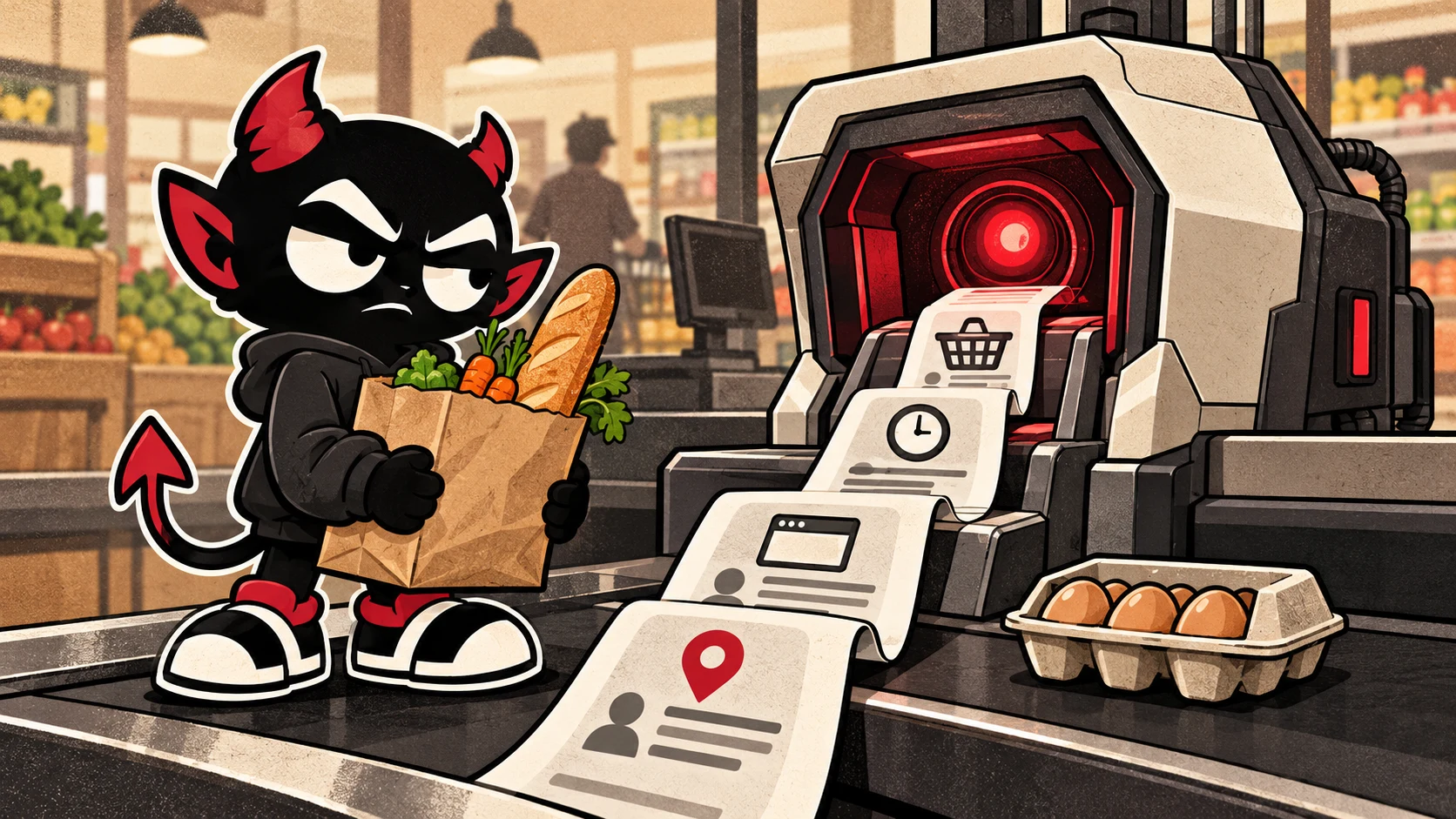
I'd like the price of something to have a little less to do with how much a company knows about me.
Tell me what you're selling and what it costs. I'll decide whether I want it. My browsing history shouldn't need to join the conversation.
On October 28, the FTC ordered nine companies, including Walmart, Target, Uber and three airlines, to provide information for a study of how personal data is used to set prices and compensation. The agency wants to examine whether customers' information affects their offers, and whether drivers' information affects what they're offered for work. FTC announcement
That's a study, not a finding that every company on the list secretly charges people according to their profiles. Reuters reported that Delta, JetBlue and Instacart denied engaging in personalized pricing. Reuters reporting
Still, it's a hell of a question to need answered about buying dinner or getting home.
The distinction that matters
Prices change. A flight bought months ahead can cost less than one bought at the last minute. A public sale can end. A discount with an understandable condition gives me something I can evaluate.
What bothers me is the possibility that two people could be offered different prices because a company has worked out which one is more likely to swallow the higher bill.
Imagine an app learning that someone rarely compares prices and offering them a higher price for the same order. That's a hypothetical, not a claim about one of the companies in this inquiry. But it explains why "the customer agreed to the price" doesn't settle the whole argument for me.
They agreed to an offer. They didn't necessarily understand how information collected about them helped shape it. And they can't easily compare their treatment with somebody else's when each person only sees their own screen.
Apparently comparison shopping may eventually require borrowing a friend.
We've already had a grocery-price argument
Last December, Consumer Reports, Groundwork Collaborative and More Perfect Union published an investigation involving 437 shoppers across four cities. Participants added the same groceries from the same stores to their online carts at the same time. They didn't complete the purchases.
Researchers found different displayed prices for many items. In one Seattle Safeway test, the same basket ranged from $114.34 to $123.93. That's nearly ten dollars for no extra groceries. Research and methodology
There's an important limit here: this wasn't proof of prices being tailored to somebody's income or personal history. Instacart said the tests were randomized and denied using personal, demographic or individual behavioral information to set item prices. It announced the end of those tests on December 22, 2025. Instacart's explanation and decision to end the tests
But the episode shows how much work it can take to establish that people are even being shown different offers. Hundreds of volunteers and a coordinated investigation, for something a customer might reasonably want to know before ordering the eggs.
I don't think asking the person next to you what they paid should become part of the checkout process.
The discount argument deserves an answer
There are benefits worth keeping. A clear loyalty discount can save money. A useful coupon can make an order affordable. I don't want a crusade against personalized pricing to become an excuse to remove discounts people actually use.
I'd want to know the condition, though. Ten percent off for joining a program is understandable. An unexplained price that might depend on information about me is much harder to assess.
A business calling something a better offer doesn't tell me what it was compared with, who can get it or whether the starting price was the same. Put enough uncertainty into that process and even a genuine discount starts to look suspicious.
That seems like a stupid thing to do to customers you're hoping will trust you again next week.
And somebody still has to deliver it
The FTC inquiry also covers compensation on ride-hailing and delivery platforms. It asks about the data and procedures behind pay offers, including whether drivers' phone usage or history of accepting offers plays a part. Those are questions under examination, not conclusions about what each company does. FTC inquiry
Consider the concern from a driver's side. If a platform could learn that someone usually accepts lower offers and use that to keep offering less, being dependable would start to look like a terrible negotiating strategy.
That's the possibility I want examined. A customer trying to keep the bill down and a worker trying to earn enough could both be making decisions with far less information than the business arranging the transaction.
I don't expect a business to hand over its entire pricing model. I do expect a meaningful answer about whether my personal information affects what I'm charged, and whether a worker's history affects what they're offered.
If a company needs that much information about me to sell me something, I can ask a few questions about the price.