
Crypto & community
Memecoins used to be fun. Now everybody's got a rate card.
After 20+ years of trading, I'm tired of paid hype, convoluted utility pitches and a memecoin scene where so many people get paid before the community gets anything out of it.
Join the discussion →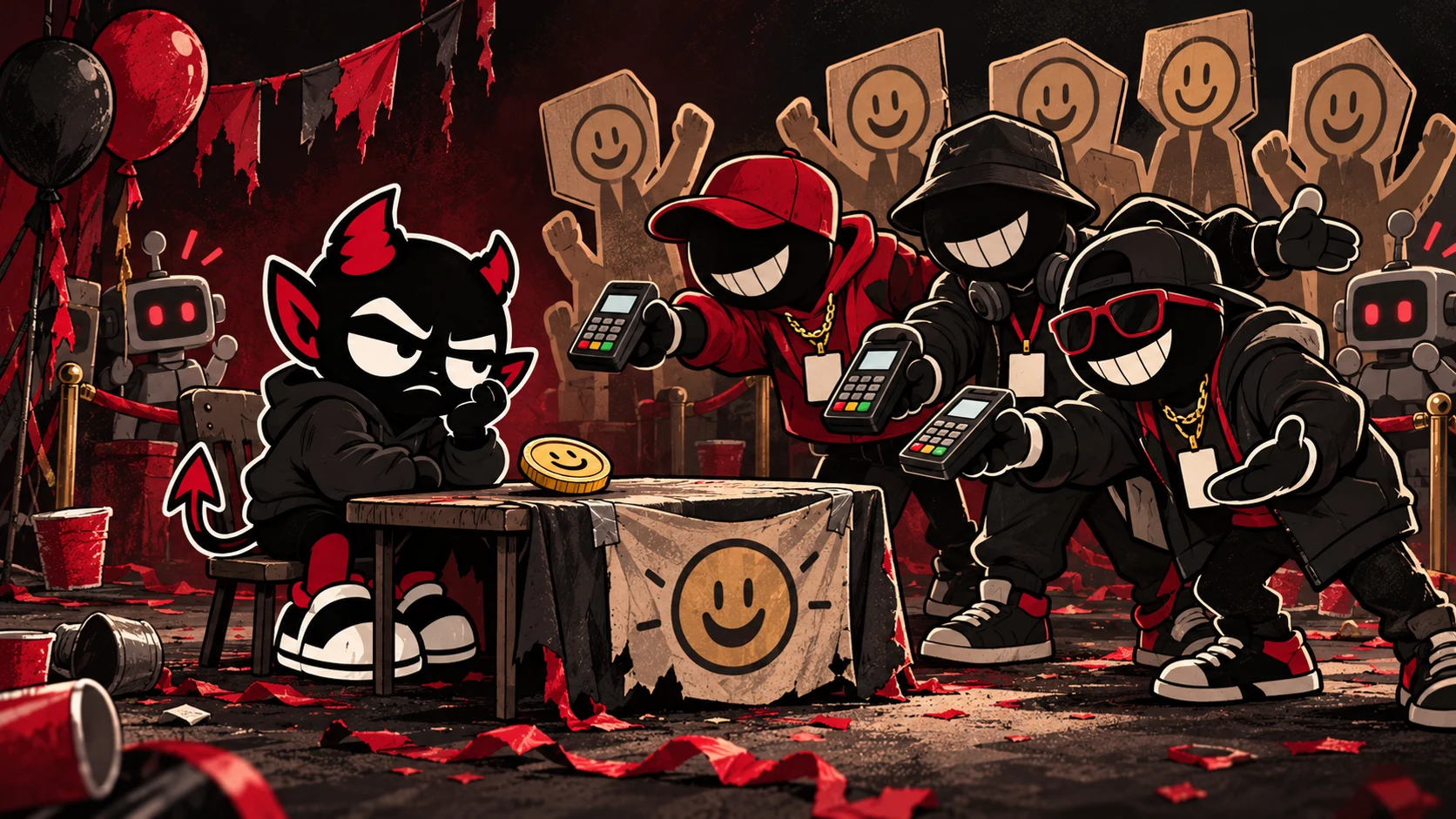
I've been trading in one form or another for more than 20 years. Stocks, options, penny stocks, crypto, memecoins. I think this is the worst part of the memecoin timeline I've been around for.
It used to be fun. People bought into something ridiculous, got excited and contributed because they wanted to see where it could go. Someone made a meme. Someone else brought friends. There was hope, and people did something with it besides asking how much they could charge the next person.
Of course people wanted to make money. We were buying tokens, not joining a volunteer fire department. And the old market had plenty of scams. I'm talking about the part I enjoyed, not claiming there was a golden age of honest shitcoins.
What wears me down now is how quickly enthusiasm turns into a price quote. A project can barely introduce itself before someone is selling it a post, a raid or access to an audience whose most reliable feature seems to be its follower count.
Everybody wants to get paid before doing anything. Then the people who actually care are left trying to figure out whether anybody else does.
A meme is allowed to be the whole point
Creators need to take some responsibility here too. I think a lot of them have lost the plot about what they're asking people to join.
A funny idea with a community around it is enough to explain a memecoin. It doesn't need to apologize for being one. People get the joke, enjoy being part of it and decide whether they want to buy in. That's the appeal I remember.
Then there's the project announcing it's "more than a memecoin." Out comes the utility pitch, followed by an explanation so complicated that I understand less about the project than I did when it was just a picture of a dog.
If I need to jump through ten hoops or read a manual to understand why this thing exists, you've lost me. Adding a feature can give people something worthwhile to do. Making them study a system of token mechanics before they can understand the benefit is a strange way to improve on a joke.
If the real pitch is a financial product, a game economy or some other token-powered service, call it that and explain what it does. Let people judge the actual thing. I'd put it in a different category rather than keep stretching "memecoin" until the word tells me nothing.
And if the utility can't be explained in ordinary language, maybe the pitch needs more work before the marketing does. I shouldn't need a guided tour to work out whether there's anything here I want to be part of.
A paid post isn't a community
There's legitimate work in this space. Artists, developers and marketers deserve to be paid for doing it. I don't expect somebody to build a website for free because a cartoon animal has brought us together.
But a phony shiller selling access to bot followers is selling the appearance of support. The invoice gets paid. The post goes up. A project still has to find actual people who give a shit.
A large follower count doesn't establish that the audience is real, interested or likely to do anything. Neither does a screenshot of a successful call. I'd want to see the misses, the payment arrangements and what happened after the promotion. A marketer with a real audience should have a better answer than pointing at the number beside their profile.
The payment can also change what the buyer thinks they're seeing. A project knows it bought advertising. Somebody scrolling past may think they're watching an independent trader get excited. If compensation or a token allocation is hidden, that person is missing information that would help them judge the recommendation.
This isn't confined to random DMs. On August 27, 2026, Protos reported that Pump.fun's top 50 callout-reward earners, meaning people rewarded for public token recommendations, had collected almost $700,000, citing an analyst's review. The report described payments tied to trading volume attracted by public calls. It also reported that Alon Cohen said the platform had significantly reduced the weighting given to the number of calls after complaints about quantity over quality. The report is about incentives, not proof that each of those recommendations was dishonest. Protos on callout rewards
If someone earns money when other people trade, their enthusiasm needs that context. I'd rather see the commercial arrangement beside the recommendation than discover it after mistaking a sales channel for a fan.
More wallets doesn't necessarily mean more people
Then there's the launch itself. A holder list can look spread out while a coordinated group controls much more of the supply than any one address suggests. A buyer sees separate wallets. That doesn't tell them whether the decisions behind those wallets are separate too.
In memecoin discussions, bundling often means coordinating launch transactions and early purchases, including purchases across several wallets. The underlying transaction technology has legitimate uses. Jito's documentation describes bundles as ordered groups of transactions that execute together or not at all. That mechanism alone doesn't establish a scam. Jito's bundle documentation
The problem is using coordinated access to accumulate a position while presenting the result as ordinary public demand. Imagine a handful of people controlling a large early stake across many addresses, then selling into buyers who believe they're joining a growing crowd. That's a hypothetical, but it's the unfairness I mean. The buyer is trying to judge participation from a display that doesn't show who's acting together.
A September 9, 2026 preprint, Meme Coin Factories, gives this concern more substance than another angry trading thread. Its dataset covers Pump.fun launches from January 2024 to January 2026, with detailed transactions analyzed in samples. Researchers documented trades that manufacture volume, creators spreading their activity across multiple addresses, and coordinated selling. They also examined services advertising manipulation tools, although they didn't purchase those services to test their claims. It describes historical trading patterns, not today's odds of making money. Read the research
The wallet count, the chart and the cheering in the replies are supposed to help a person understand what's happening. Once those signals can be manufactured, even the basic question of whether anyone else is genuinely interested becomes work.
Locked liquidity doesn't make the whole launch fair
People use "rug" for several different things. A creator pulling liquidity and an insider dumping a concentrated token position aren't the same mechanism. A price collapsing because interest disappeared isn't automatically either one.
That distinction matters when a platform talks about protection. Pump.fun describes its bonding curve and automatic migration to a canonical PumpSwap liquidity pool. Its documentation says the platform doesn't seed or remove that migrated liquidity after graduation. Those mechanics are relevant to how a coin trades. They don't tell a buyer whether early holders are coordinated or whether the promotion was paid for. Pump.fun's bonding-curve documentation
Preventing one kind of abuse is useful. I'd still want to know what can happen to my money through all the other doors.
The platform's fee page, updated October 17, lists a standard bonding-curve trading fee of 1.25%, split into 0.95% for the protocol and 0.30% for the creator. Other pool types, stages and reward configurations have different arrangements. The relevant point is that fees come from trades; the buyer doesn't need to finish with a profit for a fee to be collected. Pump.fun's fee schedule
So a launch can be a disaster for buyers and still produce revenue for people around it. Whatever the platform intends, its fees don't depend on the community having a good experience. I'd like protecting participants to receive as much attention as celebrating activity.
And when buyers are angry about being used, promising another chance to win isn't much of an answer. Protos reported boycott calls on October 26 over the delayed airdrop and the chaotic Kimchi promotion, alongside a $2.5 million trading competition. Those are reported complaints, with disputed claims around the launch still unresolved in that reporting. Another prize pool doesn't answer the underlying question of whether people trust the place. Reporting on the boycott
The people trying to contribute get tired of it
The PVP label means player versus player. I understand that a speculative trade needs a counterparty and that people will sell. Nobody owes me a profitable exit or a lifetime commitment to a coin.
But "it's PVP" has become a convenient response to behavior that deserves more scrutiny than a shrug. A transparent seller taking a profit isn't doing the same thing as somebody hiding a coordinated position and paying for enthusiasm to sell into.
There's a cost to the community even before anyone sells. A person making memes or explaining a project has to wonder whether they're volunteering to support something or doing free promotion for people already arranging their exits. A new arrival has to wonder whether a friendly reply is a conversation or the beginning of another pitch.
You can understand the suspicion. It still makes the place exhausting. Every interaction starts to need a background check, and the people willing to contribute without an invoice end up feeling like the only ones who didn't understand the arrangement.
Calling that a skill issue doesn't make it more enjoyable. It just gives someone one final chance to be a prick after the money's gone.
I want the platforms to earn some of the trust they ask for
A launch website can't stop every person interacting directly with a blockchain. Wallet relationships are imperfect evidence, and legitimate users can share funding sources. I wouldn't want an unexplained warning label treated as a conviction.
But platforms choose what their own interfaces promote, what their rankings count and how their reward programs work. I'd want suspicious activity investigated before it becomes a selling point. Give buyers useful information about connected wallets, label paid promotion clearly, and make it harder for repeat abusers to return as an apparently fresh creator.
If a platform uses trading activity to decide what gets attention, it ought to have an answer for activity that was manufactured to get that attention. Reporting tools should lead somewhere. Reward changes should come with explanations a normal user can understand. None of that guarantees a good investment. It would give people a better chance of understanding the one they're making.
The same standard belongs with promoters. Explain the service, show evidence of a real audience and disclose the interest behind the post. A project paying for marketing should be able to tell what it bought. A reader should be able to tell they're being marketed to.
Creators have a part in earning that trust too. Be clear about what people are joining. If it's a meme, let it be a meme. If there's a product behind it, explain the product without making people decipher a promise that it's "more."
I still like the absurdity of memecoins. People can rally around something silly and make it worth spending time on. That possibility is why the current state bothers me.
I'm tired of being told to accept all this as the price of participating. The risk was already there. I don't also need every person between the idea and the community holding out a payment terminal.
I'd like to enjoy the fucking thing again.